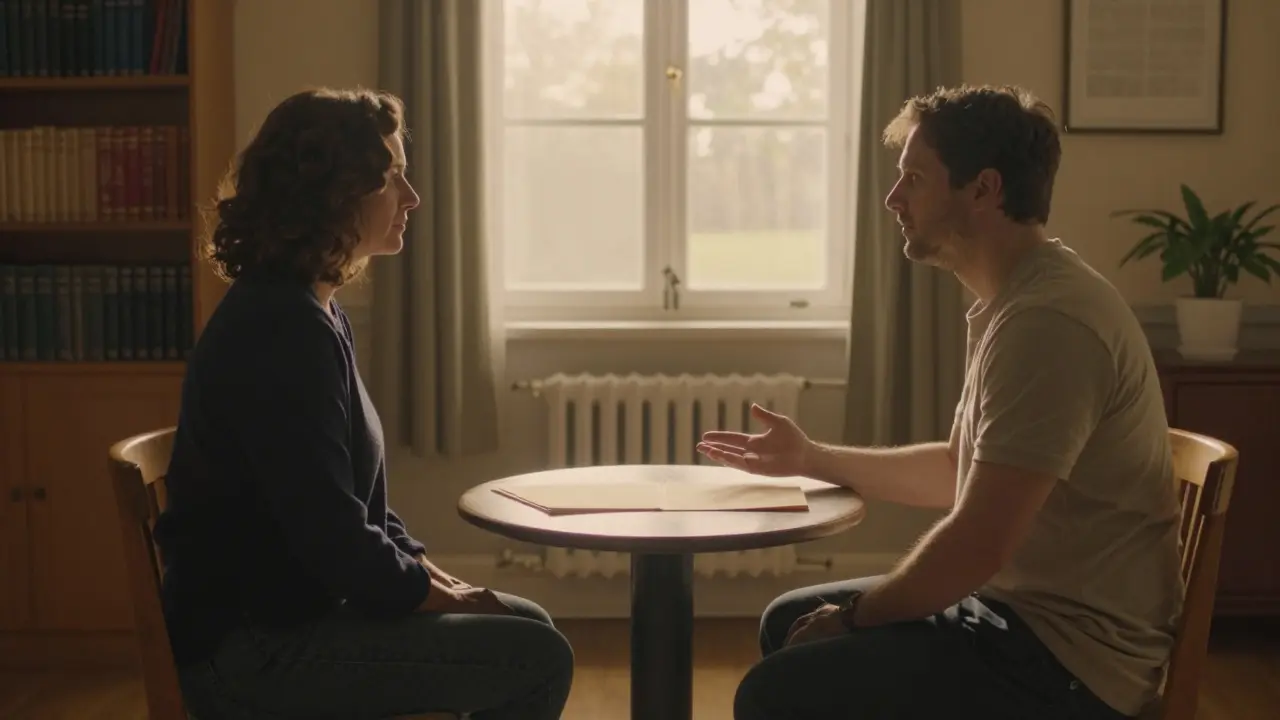
When you walk into a therapy session for the first time, you’re not just meeting a professional-you’re stepping into a space that should feel safe, even if you’re scared. But safety doesn’t happen by accident. It’s built, piece by piece, through a deliberate conversation: the rozhovor o bezpečí v terapii. This isn’t just a formality. It’s the foundation that turns a room with two people into a real therapeutic alliance.
Proč je rozhovor o bezpečí vůbec potřeba?
Many clients come to therapy with deep wounds, past betrayals, or trauma that made them feel powerless. Some have been let down by systems before-doctors, family, even previous therapists. If you don’t talk about safety upfront, you’re leaving them to guess: “Will they judge me? Will they tell someone? What if I break down?”
According to the Czech Psychological Institute of the Czech Academy of Sciences (2022), this conversation is not optional. It’s a legal and ethical requirement during the first session. Without it, trust doesn’t form. And without trust, therapy doesn’t work. Research from Palacký University in Olomouc (2021) shows that when clients are actively involved in setting safety rules, therapy success rates rise by 37%-especially for those who start out distrustful or anxious.
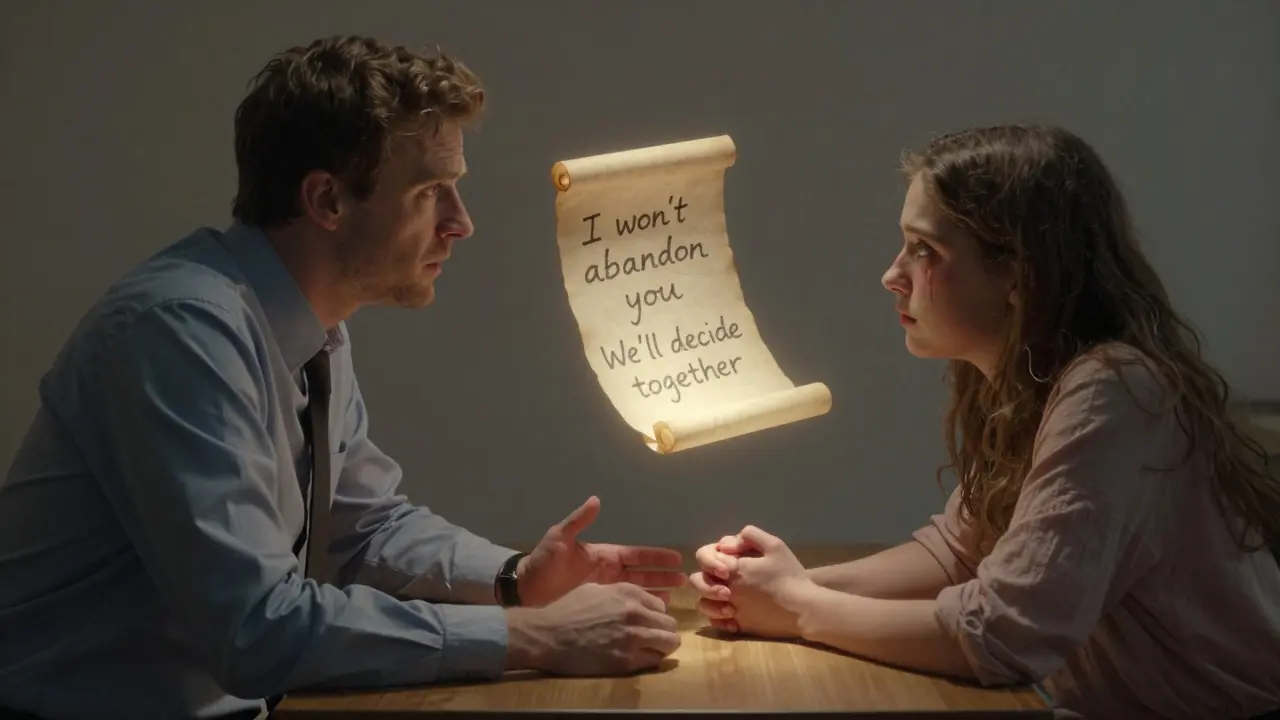
It’s not about rules for the sake of rules. It’s about saying: “You are not alone here. We will navigate this together, and I will not abandon you.”
Fáze rozhovoru: Jak to vlastně probíhá?
This isn’t a monologue. It’s a dance. And like any good dance, it has steps.
First comes the úvodní fáze. You start with warmth. You say: “Today, we’ll talk about how we’ll work together. This isn’t about fixing you-it’s about building something safe.” You explain the session length, how cancellation works, and that this is a space where silence is okay too. You ask for consent. Not just a nod-but a real “yes, I’m here for this.”
Then comes the vzestupná fáze. You ease in. You ask open-ended questions: “What do you hope to get out of this?” or “What has helped you feel safe in the past?” These aren’t just small talk. They’re your way of learning how this person sees the world. According to the Department of Psychology at Palacký University (2022), 70% of effective clinical conversations use open questions. Closed questions-like “Do you feel anxious?”-should stay under 30%. They shut things down. Open questions open doors.
The jádrová fáze is where the real work happens. You talk about the hard stuff: What happens if you say you want to hurt yourself? What if you talk about violence? Who will be contacted? How? When? You don’t just list rules-you co-create them. “Would you be okay if I called your emergency contact if I felt you were in danger?” “Would you prefer I text you first, or call?” You listen. You adjust. You let them shape the boundaries.
And finally, the závěrečná fáze. You don’t end with a checklist. You end with humanity. You say: “I know this was heavy. How are you feeling right now?” You use compliments-genuine ones. “I’m really impressed by how clearly you described your fear.” “It takes courage to say that.” Research from Terapio.cz (2022) shows therapists who use 3-5 authentic compliments in the first session build stronger bonds. Then you leave space. Silence. A breath. A moment to exhale.
Co se vlastně domluvíme?
Here’s what a real safety agreement includes-not as a legal document, but as a living promise:
- Důvěrnost-everything you say stays here, unless someone’s life is at risk. Not “maybe.” Not “sometimes.” Clear, simple, and absolute.
- Sebevražedné myšlenky-if you say you’re thinking of ending your life, we’ll talk about it. Not to scare you. To help you. We’ll map out a plan: who to call, what to say, where to go. No surprises.
- Kontakt mimo sezení-can you text? Call? Email? If yes, what’s acceptable? A crisis? A panic attack? Or just “I had a bad day”? Set limits so you don’t feel abandoned… or overwhelmed.
- Zrušení konzultace-how much notice? What if you’re too sick to come? What if I’m sick? Be clear so neither of you feels guilty.
- Online terapie-if you’re doing video sessions, you need a separate agreement: Is your room private? What if the connection drops? What’s the backup plan? A phone call? A text? You need this.
And yes-it’s okay if you don’t know the answers yet. That’s why you’re here. You don’t have to have it all figured out. You just have to be willing to figure it out together.
Co se děje, když to neuděláte?
Some therapists still treat this as a formality. They hand you a paper, say “read this,” and move on. But research from the Czech Psychological Institute (2022) shows this approach reduces client trust by 42% compared to collaborative agreements. Clients feel like objects, not people.
One Reddit user, posting anonymously in June 2023, said: “When my therapist explained exactly what would happen if I talked about suicide, I finally felt safe. It wasn’t a threat. It was a plan.”
Another, on Terapio.cz in August 2023, shared: “I cried when we wrote down what to do when I had nightmares. I’d never had a therapist say, ‘Let’s make this ours.’”
But then there’s the other side. A user on Proboha.cz in October 2023 wrote: “No one told me my words could be reported to police. I only found out when I was arrested for domestic violence. I felt betrayed.”
That’s not a mistake. That’s a failure. And it doesn’t have to happen.
Co dělat, když klient má akutní riziko?
Not all safety conversations are the same. If someone is actively planning suicide, you don’t start with “How do you want to handle this?” You start with: “Are you safe right now?”
According to sur.cz (2021), in crisis situations, you must prioritize immediate safety over participation. Ask directly: “Do you have a plan?” “Do you have the means?” “Have you done this before?”
Then you act. You don’t negotiate. You don’t wait. You call emergency services if needed. You stay with them. You don’t leave them alone. After the crisis, then you return to the safety conversation-not as a formality, but as healing.
Co se mění v moderní praxi?
Therapy isn’t stuck in the past. Today, 92% of registered psychotherapists in the Czech Republic (Czech Psychological Society, 2023) use safety conversations as standard practice. That number has grown 5% each year since 2018, after legal changes strengthened ethical standards.
And now, digital tools are changing the game. A startup called TherApp, founded in 2021, lets therapists create digital safety plans that comply with GDPR. By 2025, 75% of Czech therapists are expected to use some form of digital documentation.
Personalization is key. A client with PTSD might need a “safe word” to pause a session. A teen might want a parent involved only in emergencies. A refugee might need translation support. One-size-fits-all doesn’t work anymore.
Co by měl každý terapeut vědět?
First: you need to know the European Association for Psychotherapy (EAP) standards and Czech data protection laws. You can’t build safety if you don’t know the rules.
Second: practice matters. A 2022 study from Palacký University found only 41% of future therapists received proper training in conducting safety conversations. That’s alarming. You can’t teach empathy from a textbook. You need to practice it-with role-play, feedback, supervision.
Third: don’t over-formalize. As PhDr. Lucie Svoboda warned in 2013: “The last thing you want is for the client to leave feeling worse than when they came.” If the conversation feels robotic, you’ve lost the point.
Fourth: write it down. Have a signed agreement. Not to scare the client-but to show them: this matters. This is real.
Co můžete dělat jako klient?
You don’t have to be passive. You have a right to ask:
- “What happens if I say I want to hurt myself?”
- “Will you tell my partner if I talk about infidelity?”
- “Can I call you if I’m in crisis?”
- “How will you protect my privacy in online sessions?”
If they dodge, get vague, or say “you’ll understand when we get there”-walk away. Real therapists welcome these questions. They don’t see them as challenging. They see them as brave.
And if you’re unsure? Say: “I’ve never done this before. Can we talk about what safety looks like here?”
That’s not weakness. That’s wisdom.
Závěr: Bezpečnost není pravidlo. Je to slib.
Therapy isn’t about fixing broken people. It’s about rebuilding trust-piece by piece, word by word.
A safety conversation isn’t a box you check. It’s the first real moment of connection. It says: “I see you. I hear you. And I won’t let you fall alone.”
When done right, it doesn’t just prevent harm. It creates healing.
Proč je rozhovor o bezpečí v terapii důležitější než podpis smlouvy?
Podpis smlouvy je formální krok. Rozhovor o bezpečí je lidský. Smlouva říká: „Toto jsou pravidla.“ Rozhovor říká: „Toto jsme se dohodli společně, protože ti věřím a chci, abys se cítil bezpečně.“ Studie ukazují, že klienti, kteří se zapojili do vytváření pravidel, jsou o 37 % více připraveni pokračovat v terapii. Smlouva chrání terapeuta. Rozhovor chrání klienta.
Co dělat, když mi terapeut neřekne, co se stane, když budu mluvit o sebevraždě?
Přímo se ho zeptej: „Můžete mi vysvětlit, co byste udělal, kdybych řekl, že chci skončit život?“ Pokud se vyhýbá odpovědi, zavřete sezení a hledejte jiného terapeuta. Každý kvalifikovaný odborník v Česku je povinen tuto informaci poskytnout. Neexistuje žádná etická výjimka. Pokud se to neřekne, není to terapie-je to hazard.
Je možné změnit bezpečnostní dohody během terapie?
Ano. Bezpečnostní dohody nejsou pevné jako beton. Jsou jako živý orgán-mění se s vámi. Pokud se vaše situace změní (např. přestanete užívat léky, začnete pracovat, narazíte na nové triggery), máte právo požádat o přehodnocení pravidel. Dobrý terapeut nebere to jako kritiku. Berou to jako znamení důvěry.
Proč některé terapeuty odmítají online terapii?
Neodmítají-ale někteří z nich neví, jak bezpečně provádět online sezení. Pokud terapeut neumí zajistit soukromí, stabilní spojení a nouzový plán, je lepší sezení zrušit. Digitální bezpečnost není technický problém-je to etický závazek. V Česku je 68 % klientů nyní v online terapii. Pokud váš terapeut to odmítá, neznamená to, že je „tradiční“. Znamená to, že je nekvalifikovaný.
Co dělat, když mi terapeut řekne „tohle je výjimka“ a pak mi něco sdělí?
Pokud vám terapeut sdělí něco, co jste nečekali (např. že informoval policii nebo rodinu), máte právo požádat o vysvětlení. Pokud to nebylo domluveno dopředu, je to etické selhání. Můžete se obrátit na Českou psychologickou společnost nebo na odbornou rada. Nejste „příliš citlivý“. Jste právoplatný klient. A právo na bezpečí nemá výjimky.
Jak zjistím, zda je terapeut kvalifikovaný?
Zkontrolujte, zda je registrovaný v registru České psychologické společnosti. Hledejte označení „psychotherapeut“-ne jen „konzultant“ nebo „poradce“. Ptáte-li se, zda má certifikát od EAP nebo českého systému specializovaného vzdělávání, je to dobrý znamení. A pokud v první schůzce neudělá rozhovor o bezpečí-to je červená vlajka. Kvalifikovaný terapeut nebojí otázek. Odpovídá na ně.





Napsat komentář